The Physics Behind Sparking Outlets and Switches in Bothell Homes
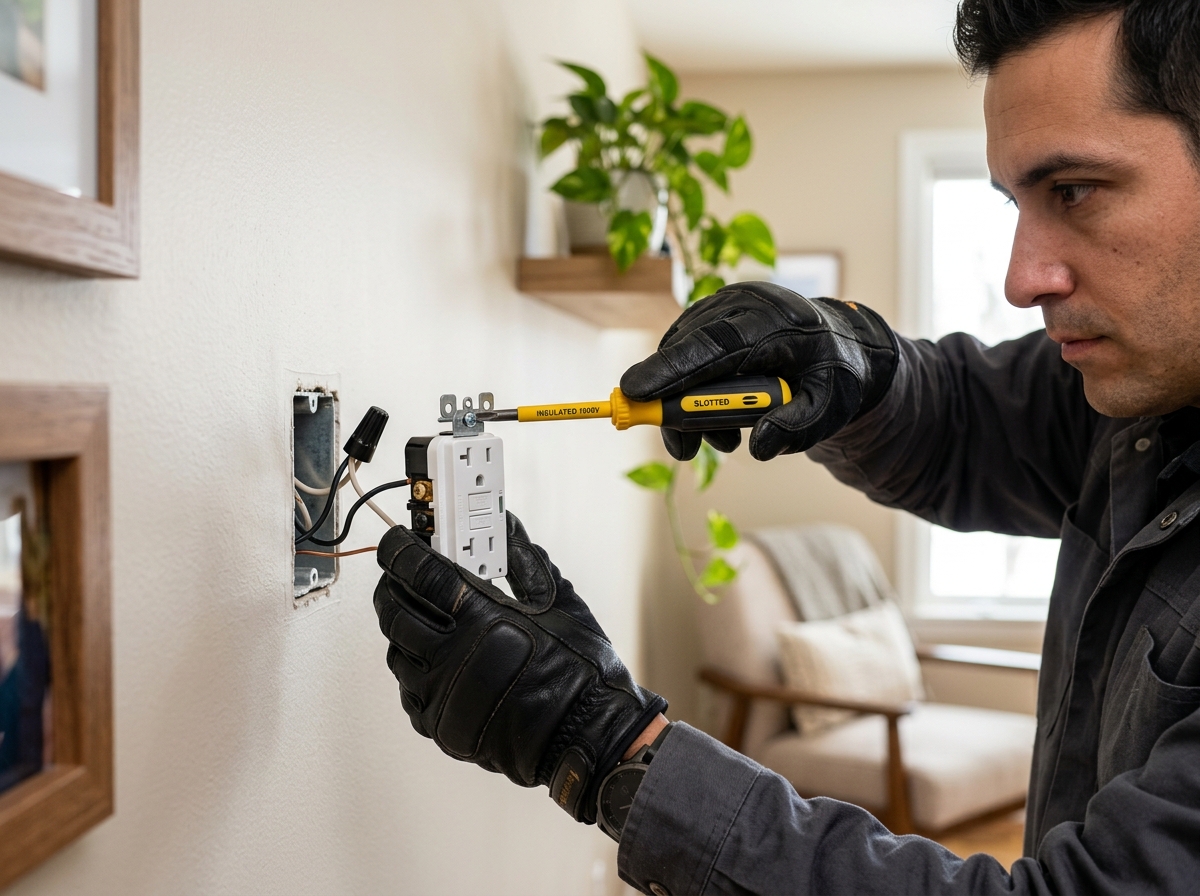
While a microscopic blue flash can occasionally occur when plugging in an active heavy-draw appliance (due to capacitance), repeated, persistent, or audible sparks indicate mechanical failure. The most frequent cause in Bothell homes is worn internal spring contact clips. Receptacles rely on spring-tensioned brass or phosphor-bronze metal leaves to grip appliance plug prongs. Over 15 to 30 years of daily use, these clips stretch and lose tension. When plug blades sit loosely, electricity jumps the microscopic air gap, creating sustained arcing that reaches temperatures exceeding 1,000°F.
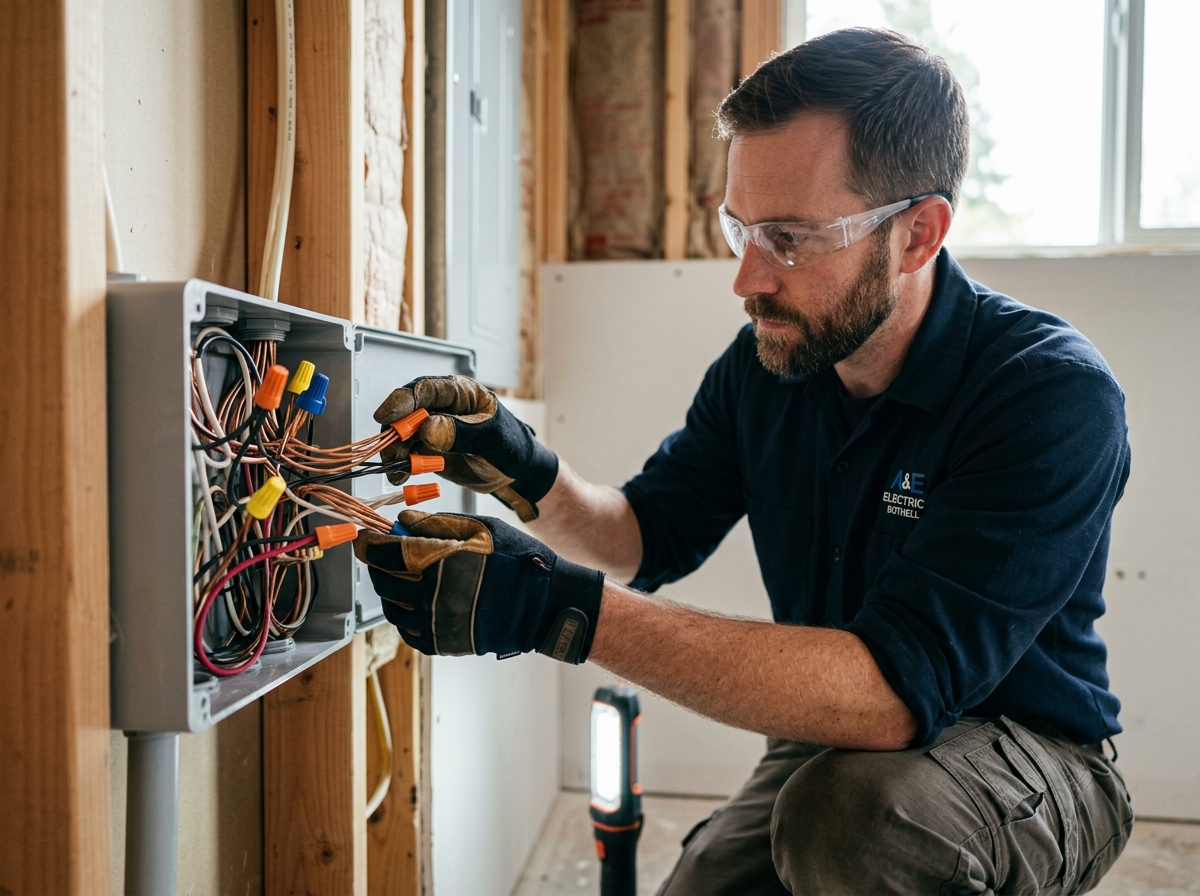
In suburban developments built throughout North Creek, Queensgate, and Canyon Park during the 1970s and 1980s, electrical contractors frequently used 'quick-wire' or 'backstabbed' push-in wire terminations on the rear of outlets. Rather than wrapping the copper wire around a side terminal screw, wires were pushed into spring-loaded internal clips. Over decades of thermal expansion and contraction, these spring clamps weaken, creating loose, high-resistance connections that generate intense heat and spark behind drywall.
Similarly, wall switches spark when internal contacts erode or when modern LED fixtures are paired with older non-compatible rheostat dimmers. As switches age, carbon deposits accumulate on the opening contacts, sustaining electrical arcs that melt plastic switch bodies and create distinct fishy or ozone burning smells.