The Hidden Risks of Exposed Wiring and Open Splices in Bothell Residences
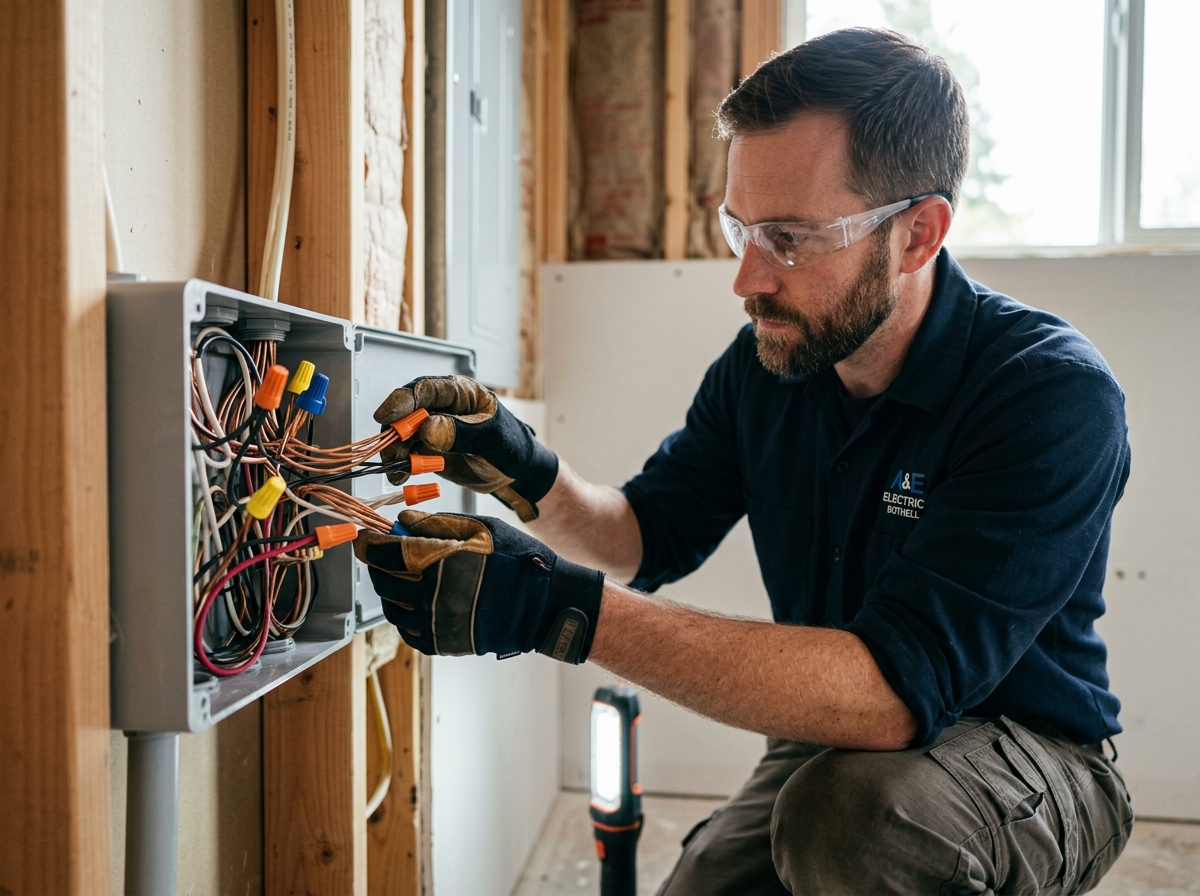
Under modern National Electrical Code (NEC Article 300.15), all electrical splices, taps, and conductor terminations must be enclosed inside a listed electrical box, conduit body, or cabinet. Despite this clear safety requirement, decades of amateur DIY modifications and unlicensed renovations in older Bothell homes have left countless 'flying splices' hidden above ceiling joists, behind knee walls, and in damp crawlspaces—two bare wires joined only by a twist of electrical tape or wire nuts, hanging in open air.
In Western Washington's climate, uncontained wiring in unconditioned spaces is exposed to chronic humidity and pest intrusion. Over years of seasonal humidity shifts in Bothell, electrical tape dries out, uncoils, and leaves energized copper exposed to airborne moisture. Furthermore, when insulation workers, plumbers, or HVAC technicians crawl through attics, an unprotected flying splice can be stepped on or snagged, snapping live conductors and igniting dry blown-in cellulose or fiberglass insulation.
Additionally, Bothell homes located along wooded greenbelts (such as near North Creek, Brickyard Road, or Maywood) regularly experience rodent activity. Mice and rats strip outer sheathing and inner vinyl insulation down to bare copper to wear down their teeth. Without a protective steel junction box or armored conduit, these stripped cables arc against metal plumbing pipes or combustible wood framing.