Why Overheated Panels and Electrical Components Smell Like Fish or Burnt Plastic
Homeowners are often perplexed when an electrical problem smells distinctly like rotten fish, urine, or pungent burning plastic. Modern circuit breaker casings, wire insulation, and outlet bodies are manufactured using thermosetting phenolic resins and synthetic polymers. When these chemical compounds undergo severe thermal degradation—typically when heated above 250°F by loose electrical connections—they release volatile amine and aldehyde gases that produce an unmistakable, acrid fishy odor before active flames ever appear.
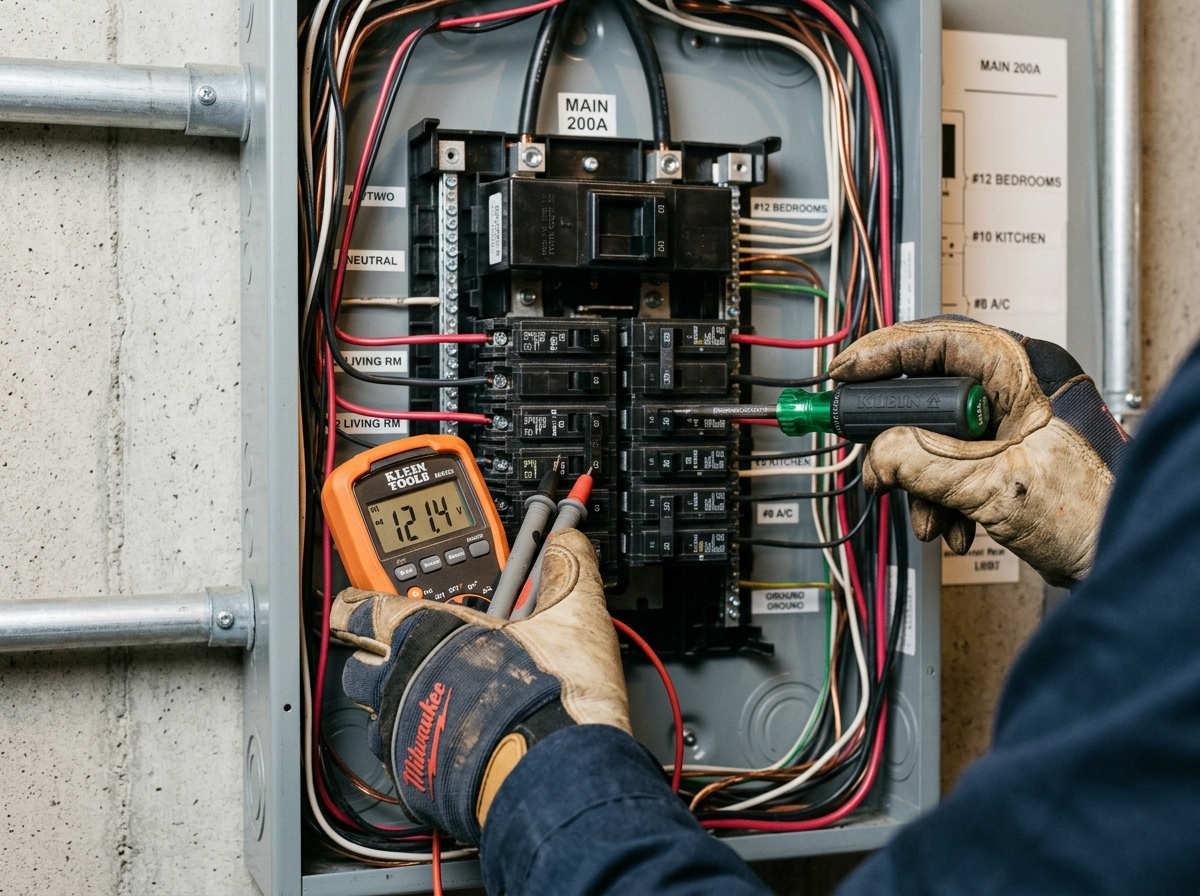
In Bothell residences, this extreme heat is almost always generated by electrical resistance at loose terminal connections. Under Joule's First Law of Electric Heating (Heat = Current² × Resistance × Time), a loose lug or loose breaker clip increases mechanical resistance. As high current flows through that resistance to power a heat pump, electric water heater, or EV charger, heat escalates exponentially. The connection can reach temperatures exceeding 800°F, melting plastic housings, annealing copper conductors, and burning the panel's internal bus bar.
Another primary cause is an overloaded older electrical panel. Many homes in areas like Canyon Park, North Creek, and Norway Hill operate on 100-amp or 125-amp service panels installed decades ago. When modern household loads simultaneously run during cold winter mornings—heating elements, water heaters, and electric vehicle chargers—the total continuous current draw exceeds the panel's thermal dissipation rating, causing the entire metal cabinet to radiate intense heat.